Is Your Howard County Home Protected From Sub-Floor Moisture?
Maryland's humid summers and heavy seasonal rains saturate local soil. When your home has an open, vented dirt crawlspace, that moisture evaporates upward into your floor joists, insulation, and home air supply. Crawlspace encapsulation completely seals your home off from the earth, transforming a damp, dark cavity into a clean, dry, conditioned environment.
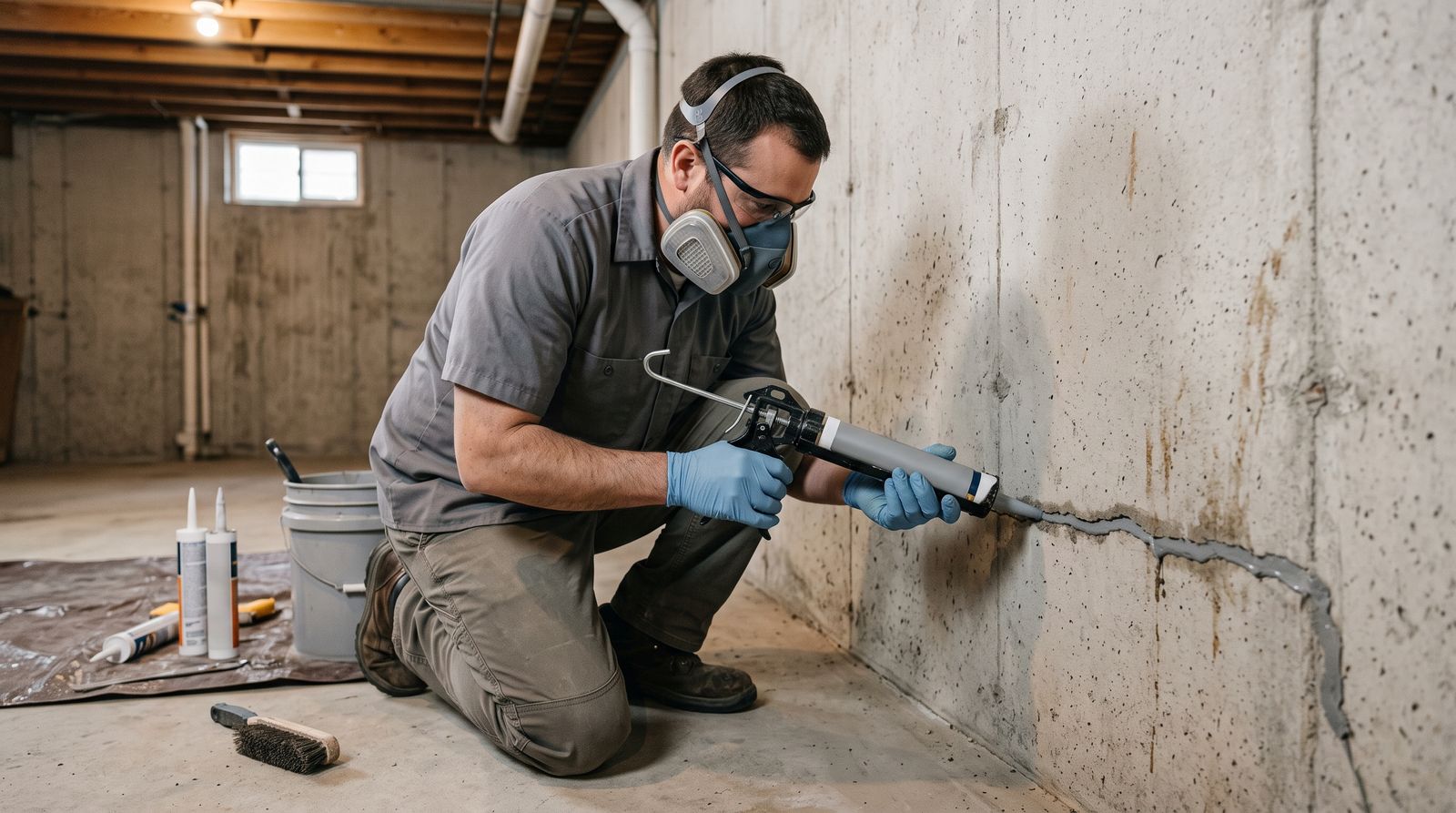
Sealing foundation cracks and gaps is a critical first step before the vapor barrier goes in.
Our Step-by-Step System for Long-Term Protection
When you book an encapsulation project through our Howard County expert network, our Howard County field crew executes a military-grade moisture barrier system:
- Debris Removal and Grading: Clearing out old, ruined fiberglass insulation, sharp rocks, and construction debris, followed by leveling the dirt floor.
- Water Management Integration: Installing heavy-duty interior French drains and a premium smart sump pump system if your crawlspace experiences standing water or seasonal flooding.
- 20-Mil Vapor Barrier Wrapping: Lining the dirt floor and masonry walls with a thick, bright white, puncture-resistant 20-mil vapor barrier. All seams are permanently locked with heavy-duty structural tape.
- Thermal Insulation and Vent Sealing: Sealing old exterior foundation vents and wrapping foundation walls with premium insulation to slash your winter heating bills.
- Commercial Dehumidification: Installing an energy-efficient, self-draining crawlspace dehumidifier to permanently regulate relative humidity below 50%, stopping mold dead in its tracks.
Get a Custom Encapsulation Estimate
Speak directly with a specialist or drop your details to secure an on-site structural moisture reading.
📞 Call Now: (240) 366-2863 Book Free Inspection »What Does Crawlspace Encapsulation Cost in Howard County?
Most full encapsulation projects in Howard County run between $5,000 and $12,000+, depending on your home's footprint, the condition of the existing crawlspace, and whether water management like a sump pump or French drain is needed. This is far less than the cost of repairing rotted floor joists, remediating widespread mold, or replacing moisture-ruined insulation down the road. While it's a real investment, encapsulation typically pays for itself through lower energy bills, prevented structural repairs, and protected home value. This is why it's one of the most requested upgrades among local homeowners. Sealing your crawlspace once protects everything above it for decades.
Columbia Neighborhood and Surrounding Coverage Areas
Our crews work daily across the entire Howard County footprint. Whether your home is built over the clay soils of Kings Contrivance, Owen Brown, Long Reach, or Oakland Mills, or you own a historic property in Ellicott City, Clarksville, or Dayton, our mobile vehicles arrive fully equipped to map out your solution.
Frequently Asked Questions
Is crawlspace encapsulation worth the cost?
For most Howard County homes, yes. Encapsulation typically pays for itself over time through lower energy bills, since sealing the crawlspace stops conditioned air from escaping through the floor, and by preventing far more expensive repairs down the road, like rotted joists or widespread mold remediation. It also protects resale value, since a damp, unsealed crawlspace is a common red flag in home inspections.
Do I need a sump pump with my encapsulation?
Not every crawlspace needs one. A sump pump or interior French drain is recommended when your crawlspace has a history of standing water or seasonal flooding. During your free inspection, we'll check for water intrusion patterns and only recommend water management components your home actually needs.
Will encapsulation lower my energy bills?
Sealing foundation vents and insulating the crawlspace walls stops conditioned air from your home leaking out through the floor and stops humid outside air from leaking in. Many homeowners notice a measurable difference in heating and cooling costs, particularly in homes with older, vented crawlspace designs.
How is encapsulation different from just adding a dehumidifier?
A standalone dehumidifier reduces humidity but does nothing to stop moisture, pests, or outside air from entering through an open vented crawlspace in the first place. Full encapsulation seals the space with a vapor barrier and insulation first, then uses a dehumidifier to maintain that sealed environment, which is far more effective and efficient than a dehumidifier working against a constant moisture source.